 Book Review
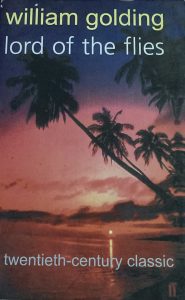
Lord of the Flies by William Golding begins at the dawn of World War II, when a plane carrying a group of schoolboys crashes on a remote, uncharted island. With no adults to supervise them, the boys initially rejoice in their newfound freedom, forming their own society to manage survival tasks like maintaining a rescue signal fire, hunting, building shelters, and establishing rules.
What starts as an adventurous attempt at self-governance soon unravels. As egos clash and order collapses, the boys descend into chaos, revealing the darker side of human nature. The story raises chilling questions: how far can humans fall without societal structure? Will they be rescued before it’s too late?
You should read Lord of the Flies to witness the gripping transformation of innocence into savagery. Characters like Ralph, Piggy, Jack, Simon, and Roger represent different aspects of society, morality, and power. Suspense builds with eerie howls, talk of monsters, mysterious disappearances, and even murder.
The title refers to “Beelzebub,” another name for the devil—symbolizing the inner darkness that emerges when civilization disappears. The boys’ creation of a cult-like worship reveals their desperate need for order, even in its most brutal form.
This novel explores deep themes: civilization vs. savagery, individual vs. community, and good vs. evil. It’s a powerful psychological study of what happens when structure disappears and primal instincts take over.
William Golding, who later won the Booker Prize (1980), Nobel Prize in Literature (1983), and was knighted in 1988, crafts a haunting and unforgettable narrative.
If you enjoy dark mysteries, psychological thrillers, or stories that question human nature, Lord of the Flies is a must-read.